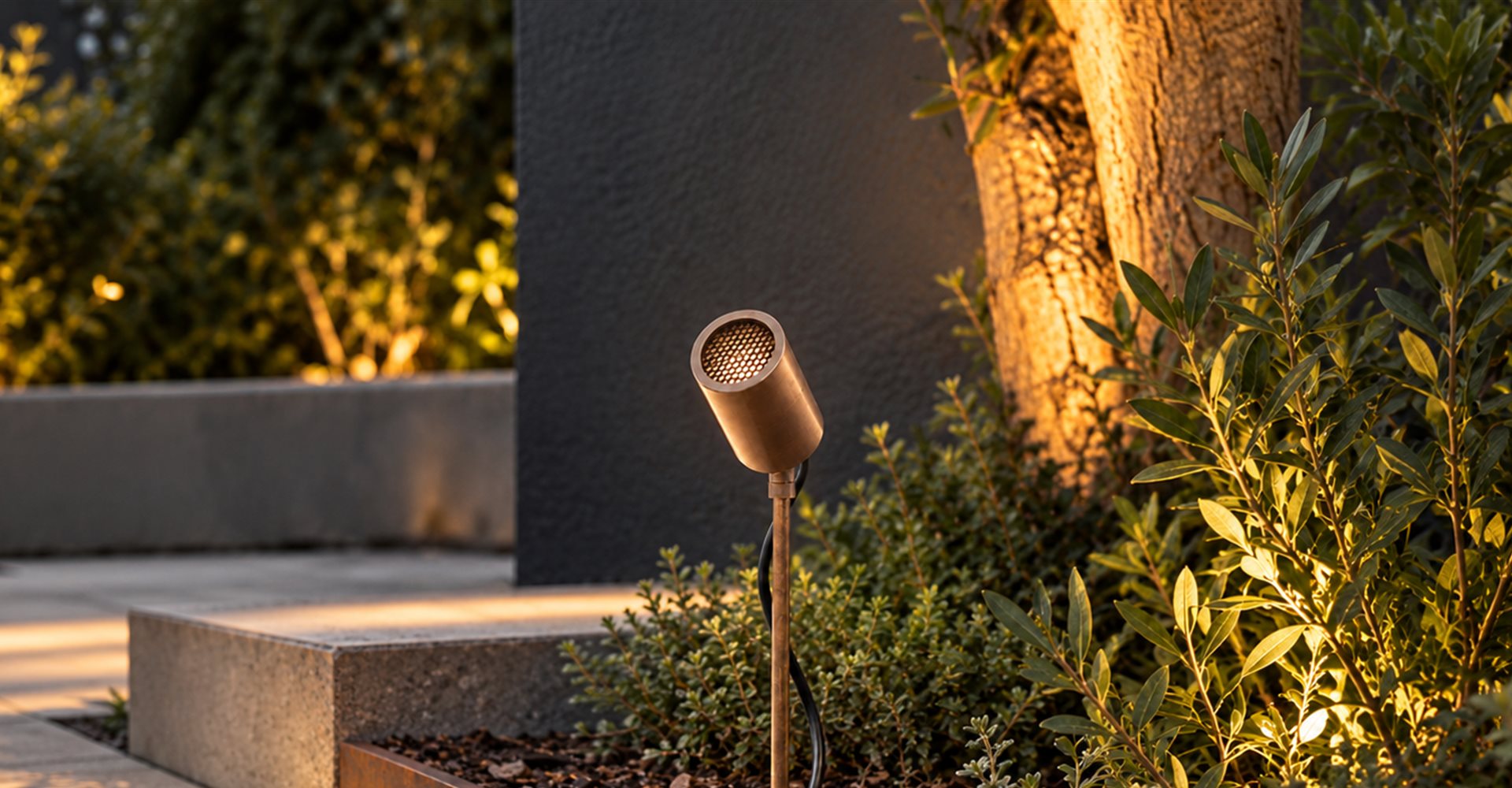



A beautifully lit garden should draw your eye to the planting, textures and architecture. Honeycomb filters help reduce direct glare from spotlights, keeping attention on what you’re illuminating. Discover why this small detail matters on Legend spikes and spots.
Why honeycomb filters make a difference to garden lighting
A beautifully lit garden invites you to look a little longer. Light catches the texture of a tree trunk, brings depth to a planted border and reveals the architectural details that disappear after sunset. The space feels welcoming, with each illuminated feature contributing to the overall view.
Achieving that balance takes more than choosing where to put a spotlight. It also means considering how that light is experienced from the terrace, along a path or through the windows of your home.
This is where a small detail can make a real difference: the honeycomb filter. Used with garden spikes and spotlights, it helps reduce direct glare, keeping attention on the planting, textures and architecture you want to illuminate.
Why glare matters in a garden
Have you ever looked across a garden and found your eye drawn straight to a bright spotlight? Even when the planting around it is beautifully illuminated, an exposed light source can become the most noticeable part of the scene.
Against a dark backdrop, that bright point can feel particularly intrusive. It can interrupt the view from a seating area, catch your eye as you move along a path or distract from the feature the fitting is intended to highlight.
Good garden lighting takes those views into account. The position of a fitting, the direction of its beam and the way its light source is shielded all contribute to how comfortable the finished space feels.
What is a honeycomb filter?
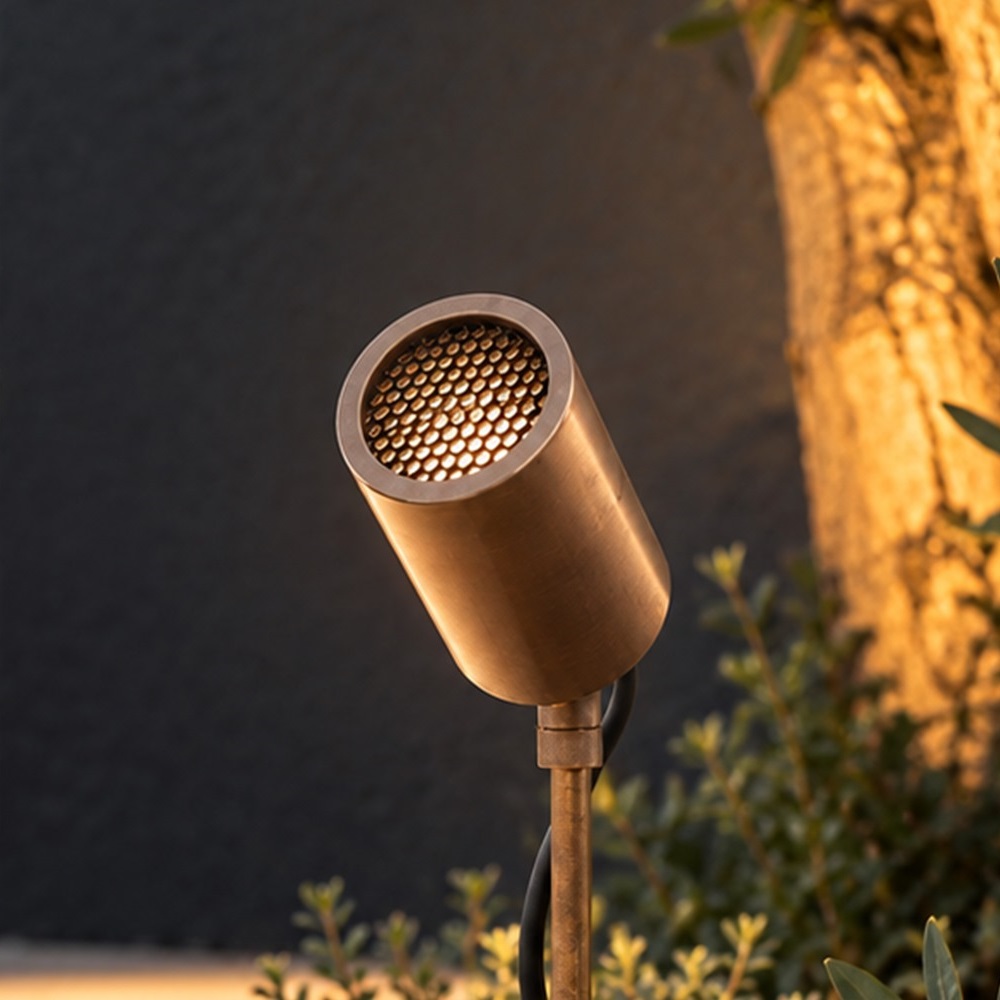
A honeycomb filter, also known as a honeycomb louvre, is a grid of small cells positioned in front of the light source. Its name comes from the distinctive pattern visible across the face of the fitting.
Those cells act as a series of miniature shields. They restrict views of the bright source from certain angles while allowing light to travel through towards the intended feature.
The benefit is particularly useful when a spotlight is seen from the side, rather than directly along its beam. Depending on the fitting and viewing angle, the source can appear less prominent, helping the illuminated subject hold your attention.
A honeycomb filter does not make a spotlight invisible or eliminate glare from every position. It adds another level of control to a carefully planned lighting scheme.
Why this detail matters on garden spikes and spots
Spikes and spots give you scope to direct light towards individual features. That makes glare control an important part of deciding where and how to use them.
A fitting within a border may be visible from several directions. A spot aimed towards a feature wall might also sit within the view from a dining area. A light that looks discreet when you are standing beside it can appear much brighter when you sit down.
Honeycomb filters help manage this relationship between the light source, the feature and the viewer. They are a small detail with a clear purpose: helping the fitting do its job without unnecessarily drawing the eye.
Consider the view from every angle
The best results come from combining glare control with thoughtful positioning. When planning your garden lighting, consider these five points:
- – Start with the feature. Decide what deserves attention, whether that is a tree, a wall or a particular group of plants.
- – Check your usual viewpoints. Look from garden seating, dining areas, paths and the rooms overlooking the garden.
- – Assess the lights while seated. A lower eye level can change how much of the source you see.
- – Adjust after dark. Small changes to position and tilt can make a noticeable difference to the finished effect.
- – Leave room for shadow. Selective illumination gives individual features space to stand out.
Revisit the arrangement as planting grows or is cut back. Changes in foliage can reveal a fitting that was previously concealed or alter where its light falls.
A small detail, a more considered result
The most successful garden lighting feels connected to its surroundings. It reveals texture, gives planting depth and makes outdoor spaces inviting after sunset.
Honeycomb filters contribute to that result by helping reduce distracting views of the light source. Combined with careful placement and aiming, they help garden spikes and spotlights keep attention on the features that make your garden distinctive.
Explore garden lighting with SW1 Lightworks, and speak to us about bringing your garden into focus after dark.